 On Ice
Guides / Sale season
How to not overspend on Black Friday and Cyber Monday
Sale season is the one week of the year when buying things you don't want feels like being sensible. You don't need to sit it out. You need to decide what you want before the shops start telling you.
Before the sales: make the list first
The whole plan rests on one move, and it has to happen before the first sale email arrives.
- Write down what you already wanted. Things you were going to buy anyway: the winter coat, the replacement headphones, gifts for named people. If it wasn't on your mind last month, it doesn't go on the list.
- Put a ceiling next to each one. The most you would pay. Look up the normal price now, while nothing is on sale, so that you can tell a real discount from a "was" price that nobody ever paid.
- Set a total for everything else. A small amount for things not on the list is realistic. Zero usually isn't, and a rule you break on day one stops being a rule.
During the sales, the list is the only question: is this on it, and is it under the ceiling? Everything else is the shop's list, not yours.
Make your phone quieter for a week
You will not out-think a hundred notifications. Remove them instead.
- Turn off shop notifications. Open Settings, tap Notifications, pick each shopping app and switch off Allow Notifications. Switch them back in December if you miss them. Most people don't.
- Unsubscribe as the emails arrive. You don't need a clear out session. Each time a sale email lands, scroll to the bottom and unsubscribe from that one. A week of this ends most of it.
- Move the shopping apps off your first Home Screen. It sounds trivial. It removes the opens you do without deciding to.
- Pick your shopping hours. If you are going to browse the sales, do it once, in daylight, with the list open. The expensive orders happen late, on the sofa, after the plan has gone to bed.
At the checkout: one question
Would I buy this at this price if there were no sale on?
If yes, it's a good deal on something you want. Buy it. If the honest answer is "no, but it's 40% off", then the discount is the only thing you want, and the cheapest way to enjoy a discount is to not pay the other 60%.
Two sale tricks are worth knowing by name:
- The countdown. Timers and "only 3 left" are there to stop you thinking. Sales now run for days and often repeat on Cyber Monday, so very few things are truly gone tomorrow.
- The free shipping gap. "Add $12 more for free delivery" gets people to spend $12 to save $5. Pay the delivery.
If you're unsure about something, the 24 hour rule still works in sale week. Write it down with the price and look again tomorrow. If the deal is gone, you have lost nothing you had planned to buy.
Afterwards: returns are not a failure
If something arrives and you feel nothing, send it back. Check the return window on the day it arrives rather than the day it expires, and put the date in your calendar. Returning a thing you don't want is the plan working late, not the plan failing.
And if you bought a few things that weren't on the list, that's a normal sale week. There is nothing to feel bad about. Note which shop and what time of day, because that tells you where to put a boundary next year.
If you'd like the phone to help
We make On Ice, an iPhone app for exactly this, so here is how it fits. You choose the shopping apps and websites that get you, and opening one shows a shield first. You can note what you wanted and let it wait 24 hours, or walk away.
For sale week in particular, a timed block is useful: it closes your chosen shops for the next 30 minutes or until a time you set, which covers the late evening well. With Premium you can also set danger hours, so late nights are stricter every day without you starting anything.
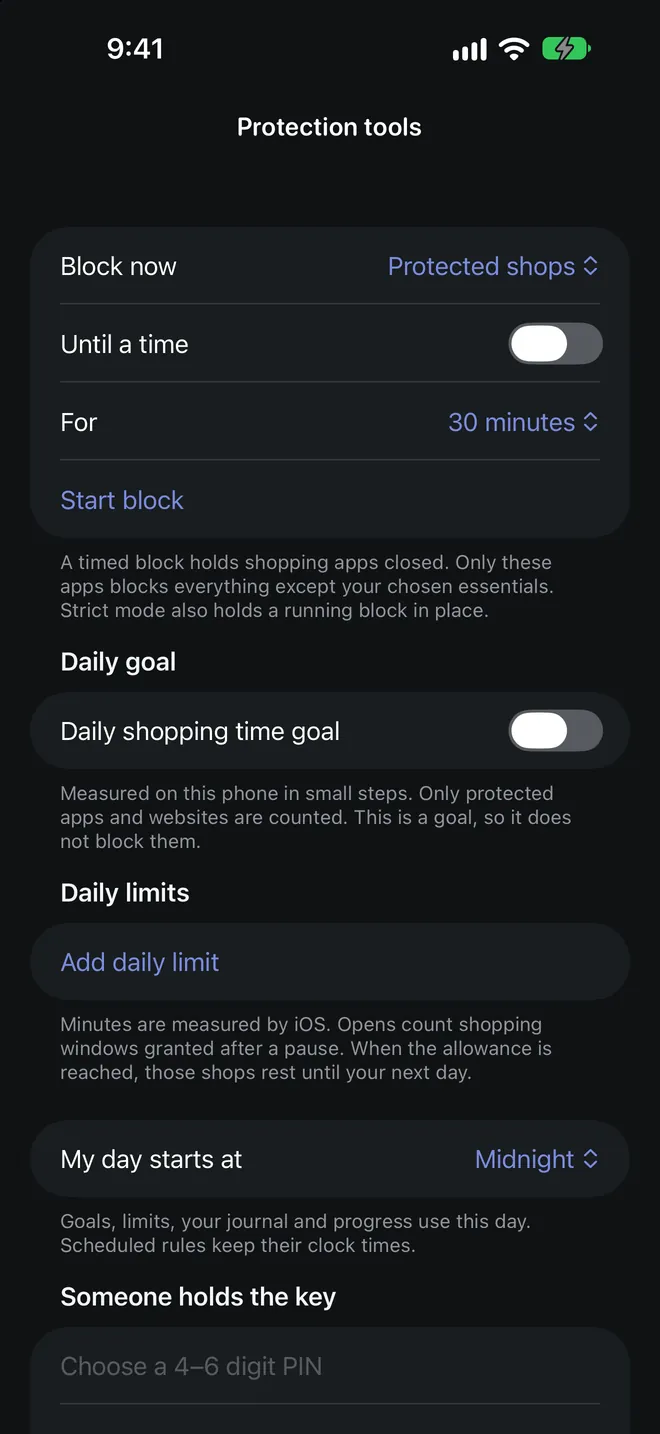
Nothing in it will tell you off for buying something. If you still want the coat tomorrow, the shop opens and you buy the coat.